

Healthcare


Meet The Instructor
Let me introduce myself. I am Jade Morgan- Lionel who has over 14 years in Medical Administration with an extensive background in the medical field . Education has always been an important factor in my life, so I decided to incorporate the two in a way where I am helping others and doing something I love. This company was created to educate and guide others from a holistic approach on healing, self-care and awareness. Today we embrace self-love in a medicinal way. Welcome to my page!!!!!
:Jade Morgan- Lionel.
Medical Assistant
This Medical Assistant course prepares students with the knowledge and hands-on skills needed to work in a variety of healthcare settings, including physicians' offices, clinics, urgent care centers, and outpatient facilities. Students learn both administrative and clinical responsibilities essential to supporting healthcare providers and delivering quality patient care.
Topics include medical terminology, anatomy and physiology, infection control, vital signs, patient communication, medical records management, scheduling, insurance and billing, phlebotomy, electrocardiography (ECG), medication administration, laboratory procedures, and medical office safety. Students also develop professionalism, ethical decision-making, and customer service skills required in today's healthcare environment.
Through classroom instruction, laboratory practice, and supervised clinical experiences (when applicable), students gain the confidence and competency to perform routine medical assisting duties while maintaining patient privacy and adhering to healthcare regulations. Upon successful completion, graduates are prepared for entry-level employment as medical assistants and may be eligible to pursue industry-recognized certification, depending on program requirements and applicable certification standards.
Topics Covered
-
Introduction to Medical Assisting
-
Medical Terminology
-
Anatomy and Physiology
-
Healthcare Ethics and Professionalism
-
Infection Control and Standard Precautions
-
Medical Office Safety and OSHA Guidelines
-
Patient Communication and Customer Service
-
Electronic Health Records (EHR) and Medical Documentation
-
Medical Office Administration and Scheduling
-
Health Insurance, Billing, and Coding Basics
-
Vital Signs and Patient Assessment
-
Medication Administration Fundamentals
-
Phlebotomy (Blood Collection)
-
Electrocardiography (ECG/EKG)
-
Specimen Collection and Laboratory Procedures
-
Diagnostic Testing and Point-of-Care Procedures
-
Assisting with Minor Office Procedure
-
Legal Aspects of Healthcare and HIPAA Compliance
-
Clinical Skills Laboratory Practice

Phlebotomy Technician
This Phlebotomy course provides students with the knowledge and practical skills required to safely and effectively collect blood specimens for laboratory testing. The course emphasizes proper specimen collection techniques, infection prevention and control, patient identification, safety procedures, and professional communication in a variety of healthcare settings.
Students learn venipuncture and capillary collection techniques, specimen handling and processing, anatomy and physiology of the circulatory system, medical terminology, quality assurance, and legal and ethical responsibilities related to phlebotomy practice. Instruction also includes laboratory safety, equipment selection, complication management, and documentation in accordance with healthcare standards.
Through classroom instruction, laboratory practice, and supervised clinical experiences (when applicable), students develop the competency to perform blood collection procedures while ensuring patient comfort, safety, and specimen integrity. Upon successful completion, graduates are prepared for entry-level employment as phlebotomy technicians in hospitals, clinics, diagnostic laboratories, blood donation centers, and other healthcare facilities, and may be eligible to pursue industry-recognized certification, depending on program requirements.
Topics Covered
-
Introduction to Phlebotomy
-
Roles and Responsibilities of the Phlebotomy Technician
-
Medical Terminology
-
Infection Prevention and Control
-
Standard and Transmission-Based Precautions
-
Laboratory Safety and OSHA Guidelines
-
Patient Identification and Preparation
-
Venipuncture Techniques
-
Capillary (Skin) Puncture Techniques
-
Blood Collection Equipment and Supplies
-
Order of Draw and Tube Selection
-
Specimen Collection, Labeling, Handling, and Transport
-
Complications of Blood Collection and Appropriate Responses
-
Quality Assurance and Quality Control
-
Point-of-Care Testing (POCT) Fundamentals
-
Legal and Ethical Considerations, Including HIPAA Compliance
-
Documentation and Laboratory Information Systems
-
Certification Examination Preparation

Medical Courier
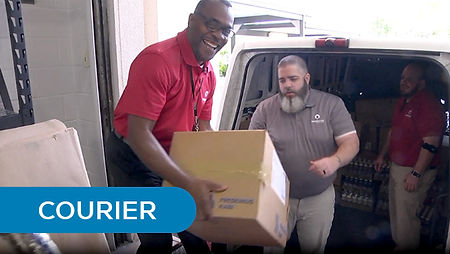
This course provides comprehensive training for individuals seeking employment as medical couriers responsible for the safe, secure, and timely transportation of medical specimens, laboratory samples, pharmaceuticals, medical records, and healthcare supplies. Participants will learn industry standards, safety procedures, regulatory requirements, and best practices for handling sensitive medical materials while maintaining confidentiality and chain of custody.
The course emphasizes proper specimen handling, transportation protocols, infection control, customer service, route management, and compliance with healthcare privacy regulations. Students will gain the knowledge and skills necessary to support healthcare facilities, laboratories, pharmacies, and medical providers through professional courier services.
Topics Covered
-
Introduction to medical courier services
-
Medical terminology and healthcare environments
-
Specimen collection transport requirements
-
Chain of custody procedures
-
Infection prevention and biohazard safety
-
Proper packaging and labeling of medical materials
-
Transportation regulations and compliance
-
HIPAA privacy and confidentiality requirements
-
Route planning and delivery documentation
-
Professional communication and customer service
-
Emergency procedures and incident reporting
Learning Outcomes
Upon successful completion, participants will be able to:
-
Safely transport medical specimens, pharmaceuticals, and healthcare materials.
-
Maintain chain of custody and delivery documentation.
-
Follow infection control and biohazard safety protocols.
-
Comply with patient privacy requirements under HIPAA.
-
Demonstrate professional communication and customer service skills.
-
Apply industry standards for packaging, handling, and transporting medical materials.
-
Respond appropriately to transportation incidents and delivery challenges.
D.O.T & Non D.O.T Urine Testing
DOT and Non-DOT Specimen Collector Course
This course provides comprehensive training for individuals responsible for collecting urine specimens for drug and alcohol testing in both Department of Transportation (DOT) and non-DOT testing programs. Participants will learn federal regulations, collection procedures, documentation requirements, specimen handling, chain-of-custody protocols, and best practices to ensure accurate, secure, and compliant testing processes.
The course covers DOT-regulated collections under the guidelines of the U.S. Department of Transportation and Substance Abuse and Mental Health Services Administration, as well as non-DOT workplace drug testing procedures commonly used by employers. Emphasis is placed on maintaining specimen integrity, protecting donor privacy, preventing errors, and recognizing situations requiring observed or monitored collections.
Topics Covered
-
DOT and non-DOT drug testing regulations
-
Roles and responsibilities of specimen collectors
-
Collection site preparation and security
-
Urine specimen collection procedures
-
Chain of Custody Form (CCF) completion
-
Specimen handling, storage, and shipment
-
Directly observed and monitored collections
-
Shy bladder and temperature out-of-range procedures
-
Error correction and fatal flaws
-
Confidentiality and professional conduct
Learning Outcomes
Upon successful completion, participants will be able to:
-
Conduct DOT and non-DOT specimen collections in compliance with applicable regulations.
-
Properly complete collection documentation and chain-of-custody records.
-
Maintain specimen integrity and donor confidentiality.
-
Identify and respond to problem collections and unusual situations.
-
Follow procedures for observed, monitored, and split-specimen collections.
-
Demonstrate competency in specimen collection techniques and documentation
.
.jpg)
Mobile Lab Start Up
This course is designed for aspiring entrepreneurs, healthcare professionals, and business owners interested in launching and operating a mobile laboratory service. Participants will learn the essential steps involved in developing, managing, and growing a mobile lab business that provides specimen collection, diagnostic testing support, wellness screenings, and healthcare services in homes, workplaces, community settings, and healthcare facilities.
The course covers business planning, regulatory compliance, licensing considerations, equipment selection, specimen collection procedures, mobile operations, marketing strategies, client acquisition, and revenue development. Students will gain practical knowledge on establishing efficient workflows, maintaining quality standards, and delivering professional mobile laboratory services while complying with applicable healthcare regulations.
Topics Covered
-
Introduction to mobile laboratory services
-
Business formation and startup planning
-
Regulatory and compliance requirements
-
Mobile specimen collection procedures
-
Equipment, supplies, and vehicle considerations
-
Laboratory partnerships and service agreements
-
Chain of custody and specimen handling
-
Quality assurance and risk management
-
Client acquisition and marketing strategies
-
Pricing, billing, and revenue generation
-
HIPAA compliance and patient confidentiality
-
Operational policies and standard procedures
Learning Outcomes
Upon successful completion, participants will be able to:
-
Develop a business plan for a mobile laboratory service.
-
Identify regulatory, licensing, and compliance requirements.
-
Establish mobile specimen collection and transportation procedures.
-
Implement quality assurance and risk management practices.
-
Build partnerships with laboratories, healthcare providers, and employers.
-
Create marketing and client development strategies.
-
Manage daily operations, scheduling, documentation, and customer service.
-
Evaluate growth opportunities and long-term business sustainability.
.jpg)
First Aid & CPR (BLS)
****Coming Soon****
First Aid and CPR Course Description
This course provides participants with the knowledge and practical skills needed to recognize and respond to medical emergencies until professional help arrives. Students will learn essential first aid techniques, adult, child, and infant cardiopulmonary resuscitation (CPR), and the proper use of an automated external defibrillator (AED). Through hands-on practice and scenario-based training, participants will develop the confidence to provide immediate care in emergency situations at home, work, school, or in the community.
The course emphasizes rapid assessment, emergency response procedures, injury management, and lifesaving interventions that can help reduce the severity of illness or injury and improve outcomes during critical situations.
Topics Covered
-
Emergency action steps and scene safety
-
Adult, child, and infant CPR
-
Automated External Defibrillator (AED) operation
-
Choking relief for adults, children, and infants
-
First aid for bleeding, burns, and wounds
-
Management of shock and medical emergencies
-
Recognition of heart attack and stroke symptoms
-
Seizures, diabetic emergencies, and allergic reactions
-
Bone, joint, and muscle injuries
-
Environmental emergencies, including heat- and cold-related illnesses
-
Infection control and personal protective equipment (PPE)
Learning Outcomes
Upon successful completion, participants will be able to:
-
Assess emergency situations safely and effectively.
-
Perform CPR on adults, children, and infants.
-
Use an AED according to established guidelines.
-
Provide first aid for common injuries and medical emergencies.
-
Respond appropriately to choking emergencies.
-
Recognize signs and symptoms of life-threatening conditions.
-
Activate emergency medical services and provide care until help arrives.
.jpg)